
 The Oribi South Africa Top 30 Index Prescient ETF (ORBT30) listed on the JSE on 23 July 2026 and the name is telling us all what it really is. You see “Top 30” and assume a Top 40 with the last ten names lopped off? That’s not it and the difference is what makes this an interesting ETF.
Two rules, thirty stocks
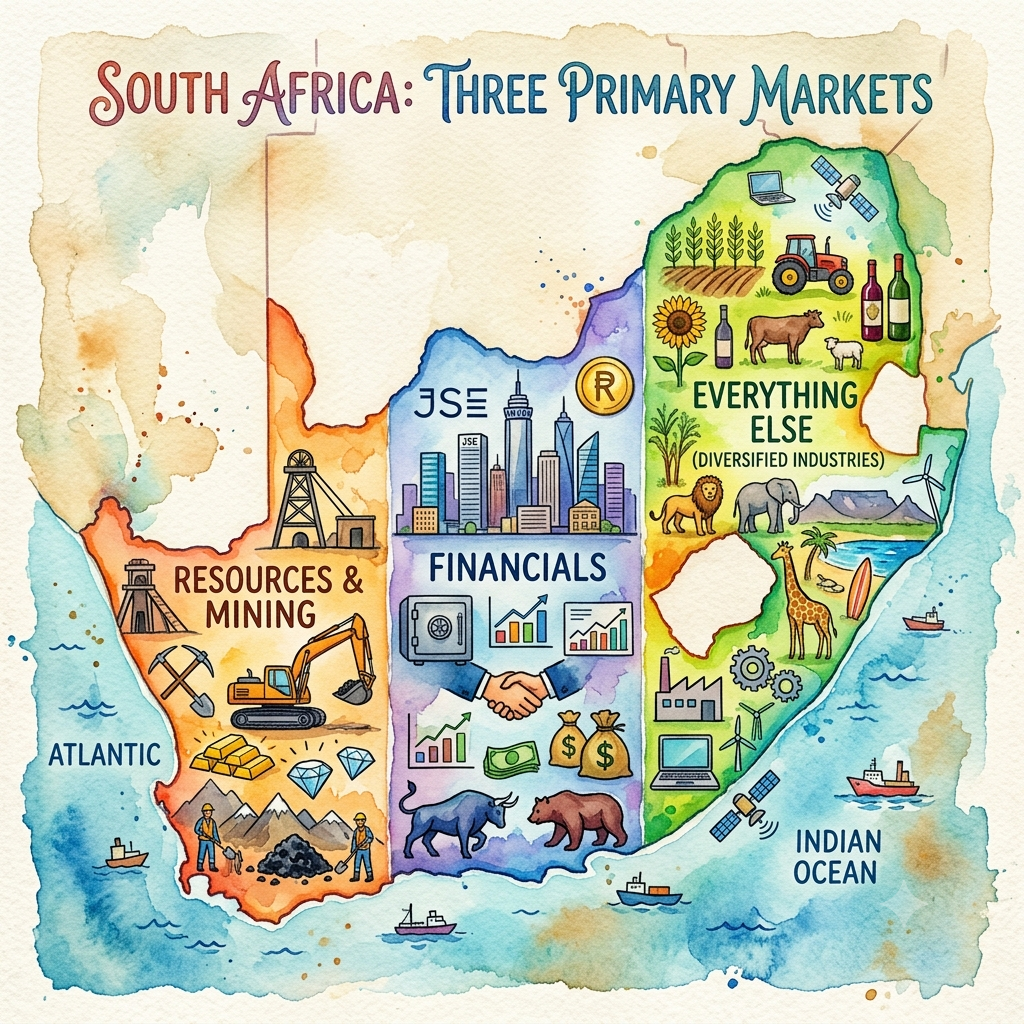
The ORBT30 ETF tracks the MerQube South Africa Top 30 Index. This is a brand new index built on two rules. First, take the 10 largest and most liquid stocks from each of three sectors; Resources (energy and materials), Financials (financials and property) and Diversified (everything else). Second, equally weight both the sectors and the stocks inside them. So each sector gets 33.3% of the money and each of the 30 shares gets 3.3%.
The eligibility screen
But then there is a rule that really matters and that’s the eligibility screen. A stock has to have a primary listing on the JSE and be domiciled in South Africa, with a free float of at least 10%. That removes the dual-listed giants that dominate our market and hence many local indices. Prosus, Richemont, BHP, British American Tobacco, Glencore, Anglo American, the London, Amsterdam and Zurich crowd, all gone.
So what you are buying is not a concentrated version of the Top 40. You are buying SA Inc, equally weighted. (As an aside, Satrix has an active SA Inc ETF of sorts, STXSAI).
Compare it to what you already own
What’s important, compare to what you already own. In the Top 40 the ten largest names sit at +50% of the index. When you buy a Top 40 tracker you are buying a lot of Tencent, a few banks and a handful of miners.
ORBT30 takes the opposite view. Naspers, likely in the Diversified 10, is 3.3%. Capitec is 3.3%. So potentially is a mid-tier gold miner you may never have looked at. That is a real diversification benefit and it is also a big bet, on resources.
A permanent third in resources
The resources weight is where things get tricky. A third of the fund in energy and materials, always, regardless of where we are in the commodity cycle? In 2021 that would have been great. In 2015 it would have hurt. Resources is roughly a quarter of the Top 40 depending on the day, so this is a permanent overweight. The flip side is that trying to time the resource rallies is impossible. With this ETF, you’ll always catch it.
Rebalanced once a year
The rebalance is the other thing worth mentioning. The index is reviewed annual at the end of February. Changes are then done on the the third Friday of March. Once a year is unusually infrequent for an index. Perhaps especially so for an equal weight as this only works if you actually rebalance. Because between reviews the winners run and the losers shrink and by February you are no longer equally weighted at all. However, annual review keeps costs and turnover down, but expect a lot of drift a lot between changes.
What it costs
The practical stuff. The TER was not published as it’s a new fund. But annual management fee is 0.35% plus vat. Distribution will be twice a year in March and September.
The risks
Thirty stocks is not many, but treat this ETF as part of a bigger portfolio and that removes or reduces that risk.
So would I buy it?
I like the thinking and the 10X Next 40 (WNXT40) does the same thing one rung down the market cap ladder. So this is a known idea in a new wrapper. Concentration in the Top 40 is a real problem and stripping out the dual listed gives you something closer to actual South African exposure than any Top 40 tracker does.
But at the end of the day is this not just kinda an active view sold in a passive wrapper?
Own it because you agree with the methodology, not because the label says Top 30.
ETF blog

At Just One Lap, we are big fans of passive investment using ETFs. In this weekly blog, we discuss ETFs on the local market and the factors you need to consider when choosing an ETF. If you have wondered how one ETF differs from another, this is where you can find out. We explain which index each ETF tracks, what type of portfolio could benefit from holding each ETF, and how the costs will affect your bottom line.


